A Miracle Morning* is a structured and intentional start to the day. It is popular with people who prize productivity. It is ripe for reimagining by educators. For those in equity-centered classrooms, the way the day begins matters. When educators start their day with a morning ritual that honors their personal story and teaching mission, their work is grounded in authenticity, clarity, and care. In this article, we encourage educators to reflect on their current morning routines. After reflection, we encourage them to consider how narrative, wellness, and intention might reshape those morning routines.
Exploring the Meaning
In order for morning routines to be most effective and productive, they should reflect who you are and what you value in your educational practice. By incorporating intentional rituals such as movement, journaling, affirmations, and quiet planning, one can start the day grounded and ready for action. When carrying out the morning routine, be sure to begin with questions, thoughts, and ideas that center things like justice, belonging, and purpose. Doing this, helps one become a better and more equity-centered educator.
The educator should treat the morning routine as the first chapter of the story of the day. When you look at the morning in this way, you understand that the morning is the first chapter, you will make it good so that the rest of the day can build upon it. When the morning starts well, you will want a good afternoon and a good evening. In other words, having a good Miracle Morning routine, sets an educator up to have a good day.
Miracle mornings are also important because for educators who need to provide trauma-informed support to students who have experienced adversity outside the classroom. A routine that includes predictability and is affirming supports regulation. When the educator is able to regulate her own emotions, she is in a better position to help students regulate their emotions.
Finally, a good Miracle Morning routine helps that honors the educator’s identity puts the educator in a better position to honor her students’ culture and identity. After all if an educator does not know who she is and what she stands for, will find it difficult to understand and appreciate why her students’ identities matter to them. It is hard to respect what one does not understand, so this step is particularly crucial for equity-minded educators.
Classroom Applications
In the classroom, educators could model their Miracle Morning rituals with students. For example, an educator can share journaling and affirmation practices with students at the start of class. If 5 minutes at the beginning of class are spent in journaling or affirmation activities, this may ground, relax, and focus students. As a result, students may have better and more productive class periods. Shared start of day or start of class activities reflect collective values and the importance of students’ voices.
There are a few practical ways these things can happen in a classroom. Check out the following by way of example:
- Journaling with prompts like, “What do I need today?” or “What do I bring with me?”
- Affirmation circles where students work in small groups to create affirmations that center identity and belonging
- Ritual check-ins where students can use music, breathing exercises, or storytelling to begin the day/class with intention
With younger students educators can use visual prompt and movement-based rituals. Older students can benefit from the ability to co-create routines and reflection prompts.
Real World Impact
When educators begin the day with a person mantra, they may see increased emotional resilience. Classrooms that use morning storytelling to build trust may find that trust is deepened and engagement is increased. When educators make their students feel good about themselves and their place in the universe they will remember who gave them that good feeling. Educators will get more from their students when they make their students feel better about themselves. Students remember things that help them show up with presence, care, and clarity.
Click here do download a copy of our “Miracle Morning Narrative Tracker.”
Conclusion
A Miracle Morning routine, is more than just a routine. It is a ritual of remembrance and readiness. When educators honor their own stories, they create the space students need to honor their own stories. If each student learns to honor their own story, they may also learn to honor the stories of other students. In turn, student subliminally learn the importance and place of equity in their education and life. Use the ideas in this article to design a morning that reflects your values, identities, and teaching mission. Share your morning rituals in staff meeting, blogs, or your classroom.
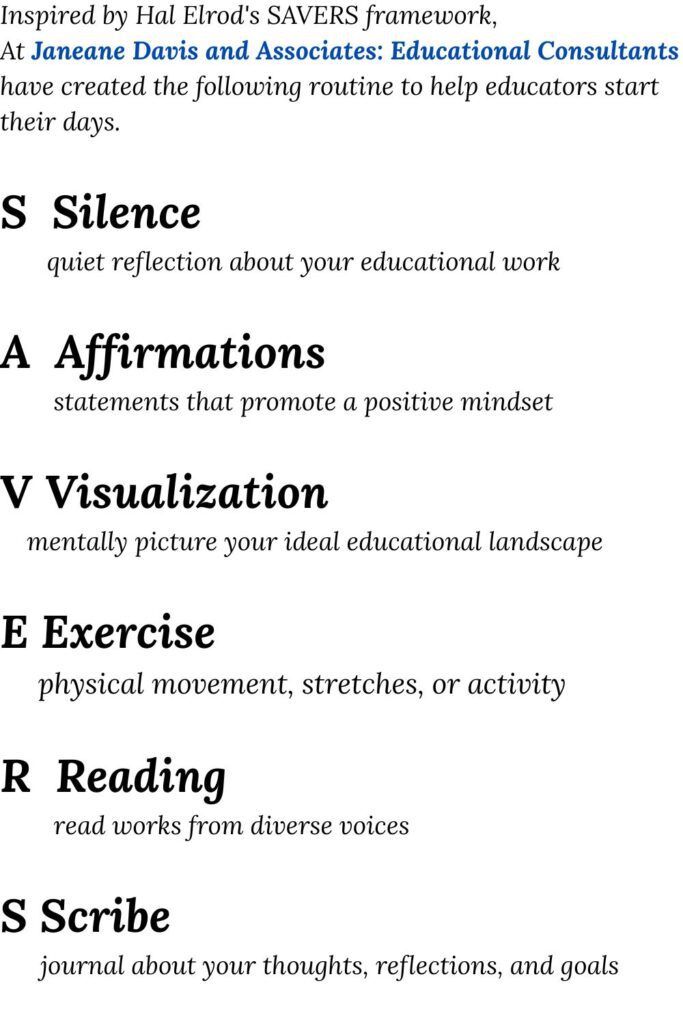
*Miracle Mornings are the creation of Hal Elrod who posited that if people started their mornings doing a certain routine which he named SAVERS, they would have better and more productive days. SAVERS was an acronym for:
- Silence
- Affirmations
- Visualization
- Exercise
- Reading
- Scribing
Further Reading
The Best Educators Strive to Create Equity-Centered Classrooms
Unlock Your Doctoral Success: Coaching & Resources That Work
Adapting a Miracle Morning Routine for Educators
Reference:
Elrod, H. (2023). The miracle morning: The not-so-obvious secret guaranteed to transform your life (before 8AM) (Updated and expanded ed.). BenBella Books
About the Author

Dr. Janeane Davis is Founder and Principal Consultant at Janeane Davis and Associates: Educational Consultants. Her mornings begin with movement, meaning, and a well-lit desk where rituals become roadmaps. She writes to help educators build mornings that nourish their mission and sustain their momentum.
Sunrise near. Pages open. Always becoming.